
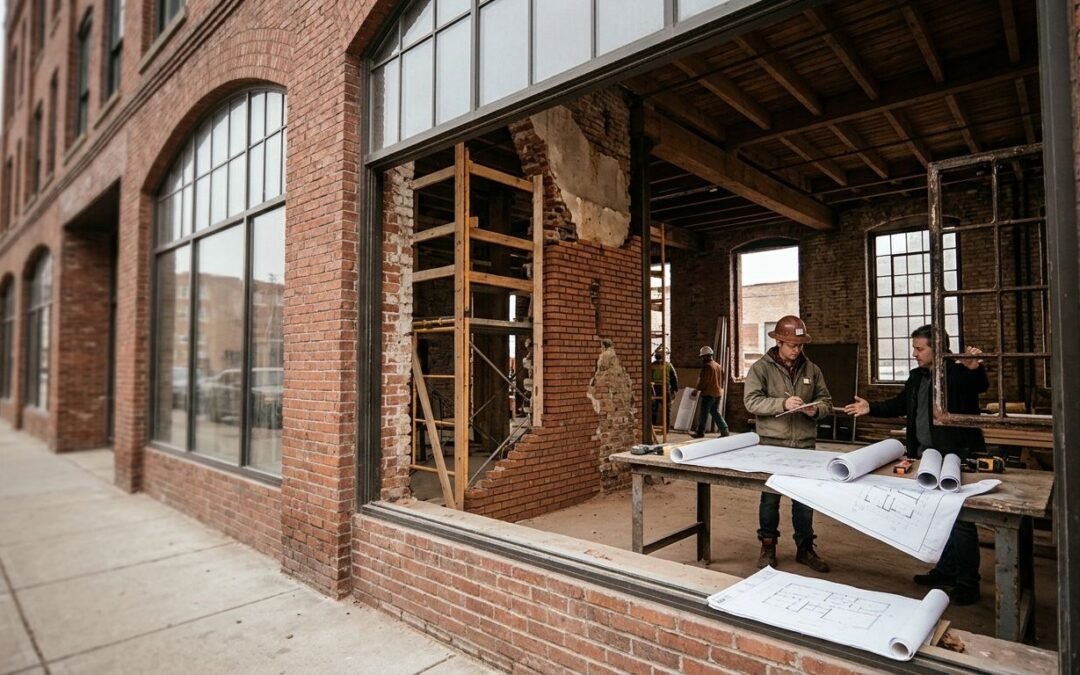
Historic review has no fixed timeline add-on for adaptive reuse in New Jersey; the added time depends on the applicable review process, submission readiness, design revisions, and whether review blocks another approval. For your 2026 schedule, distinguish the review period itself from the additional time needed for documentation, consultation, revised drawings, and permit coordination.
- How much does historic review add to adaptive reuse timelines? There is no universal duration for New Jersey projects.
- Section 106 includes specific 30-calendar-day response periods, not a guaranteed project completion deadline.
- Separate local historic review, federal consultation, and incentive-related requirements before setting permit milestones.
- Nieves Development provides development strategy and municipal-process coordination for New Jersey adaptive reuse projects.
How much does historic review add to adaptive reuse timelines?
Historic review adds time to completion when it delays a milestone that controls the project's finish date. That controlling sequence is the critical path. Review completed alongside other necessary work does not automatically extend the overall schedule by its full duration.
Start by connecting historic review to adaptive reuse permit approval. Identify the reviewing authority, the required submission, and the approval or decision that depends on the review outcome.
For 2026 planning, distinguish these review pathways rather than assigning every older building the same allowance:
| Review pathway | When to investigate it | Schedule benefit of early identification | Scheduling limitation |
|---|---|---|---|
| Local historic review | The property or proposed work falls under a municipal preservation ordinance | Reveals local submission requirements and meeting dependencies | Procedures depend on the applicable ordinance and work scope |
| Federal Section 106 review | A federal undertaking has the potential to affect historic properties | Identifies consultation obligations before dependent commitments | Individual response periods do not establish the total duration |
| Historic rehabilitation incentive review | The project seeks a preservation incentive with rehabilitation standards | Connects design decisions with incentive requirements | Incentive review is not a substitute for municipal permits |
These pathways can overlap. They are not interchangeable, and completing one does not establish that another is complete.
Why this matters
Your acquisition, financing, design, and construction milestones need a schedule built around dependencies, not a single historic-review allowance. A review running alongside design has a different effect from one that requires a redesign before permit drawings can proceed.
For a first-time owner, the essential distinction is between a reviewer's response and permission to start work. For an experienced developer, the scheduling task is to identify which decisions must be settled before the next team commits resources.
Use a dependency-based roadmap for 2026, not a blanket historic-review buffer. Record the evidence required to close each milestone, including written decisions, accepted revisions, and conditions affecting subsequent submissions.
Local historic review: confirm the municipal process
Begin with the property's designation status and the municipality's applicable preservation ordinance. A building's age alone does not tell you which local review procedure applies.
Ask the municipal office to identify whether the proposed work requires historic preservation review, which body handles it, and how that review connects to zoning and construction approvals. Confirm whether staff-level review is available for the particular work or whether a commission meeting is necessary.
The practical advantage of early local coordination is clarity about the submission package. The limitation is that an informal discussion is not the same as a formal decision.
Request the current application checklist, meeting calendar, submission cutoff, and procedures for revised materials. Treat each as a scheduling input rather than assuming that submitting drawings reserves a hearing date.
For Paterson properties, confirm the requirements applicable to the specific address and proposed scope. Do not transfer a process or calendar from another New Jersey municipality into your project schedule.
Federal Section 106: response periods are not total duration
Section 106 is the federal historic-preservation consultation process for federal undertakings with the potential to affect historic properties. A federal agency determines its responsibilities; an older building does not automatically trigger this process simply because it is being reused.
For 2026 scheduling, the Advisory Council on Historic Preservation's regulations at 36 CFR Part 800 provide specific response periods at defined stages:
- Initiation: Under 36 CFR 800.3(c)(4), the State Historic Preservation Officer or Tribal Historic Preservation Officer generally has 30 calendar days to respond to a request for review of a finding or determination, subject to the regulation's conditions.
- No historic properties affected: Under 36 CFR 800.4(d)(1), the consultation procedure includes a 30-calendar-day review opportunity following receipt of the required documented finding.
- No adverse effect: Under 36 CFR 800.5(c), the procedure includes a 30-calendar-day review period for the documented finding, with concurrence and objection procedures specified in that section.
These are stage-specific regulatory periods, not an adaptive reuse turnaround promise. The findings depend on the facts of the undertaking, and the stages are not three automatic blocks to add together.
Identification work, evaluation, consultation, documentation, and resolution of adverse effects have their own requirements. Do not assume that silence, an incomplete submission, or the passage of a response period authorizes construction; the responsible agency must follow the applicable procedure.
Incentive-related review: coordinate design and participation
When your financing strategy includes a historic rehabilitation incentive, identify that program's review requirements before treating the design as settled. Municipal acceptance and incentive compliance answer different questions.
For example, federal historic rehabilitation tax certification involves National Park Service review of historic significance and rehabilitation work. Its purpose differs from local construction permitting and from the federal agency's Section 106 responsibilities.
The benefit of early coordination is that the team can evaluate proposed alterations against the relevant program requirements before advancing dependent documents. The limitation is an additional review obligation tied to participation in that program.
Keep the incentive decision visible in the project roadmap. Ask the appropriate program administrator which determinations, submissions, and work-sequencing requirements apply rather than assuming a municipal approval resolves them.
Why the added time varies
The effect on your 2026 completion date depends on the review pathway and its relationship to other work. Use these factors to explain the schedule rather than selecting an unsupported average:
- Review authority: Local preservation review, federal consultation, and incentive certification have different procedures. Identify each applicable authority separately.
- Submission readiness: Missing photographs, unclear work descriptions, or inconsistent drawings create unresolved review questions. Check the applicable requirements before filing.
- Design scope: Proposed changes to historic materials, openings, additions, and other character-defining features require a clear description. Reviewers need to understand what remains and what changes.
- Meeting dependencies: Where a public meeting is required, the submission cutoff and agenda procedures affect sequencing. Confirm the actual calendar.
- Consultation and revisions: Objections, requested information, or design changes introduce additional tasks. Assign responsibility for responding and updating affected documents.
- Permit dependencies: Historic review affects completion differently depending on whether zoning, construction review, financing, or another milestone must wait for its outcome.
Separate confirmed requirements from open questions. An unresolved assumption should remain visible in the schedule until the responsible authority or professional resolves it.
Build a historic-review roadmap before fixing the schedule
Use the following sequence to turn a broad timing question into specific milestones. Each step should produce a record that the next participant can use.
- Confirm status. Establish the property's relevant designation information and investigate applicable local, federal, and incentive-related requirements. Retain the supporting records.
- Define scope. Describe the proposed use and physical alterations clearly enough for the relevant reviewers to identify their requirements. Distinguish retained features from proposed changes.
- Map dependencies. Identify which decisions must precede other submissions, commitments, or work. Confirm proposed parallel activities with the relevant authorities and project professionals.
- Prepare submissions. Assemble the required materials using a consistent drawing set, work description, and document register. Identify the person responsible for each outstanding item.
- Close conditions. Record decisions, required revisions, and conditions. Update the permit set and schedule before treating the historic-review milestone as complete.
The sequence supports readiness; it does not guarantee approval. A roadmap is useful only when its milestones reflect the actual review requirements.
Keep a decision log alongside the schedule. Record the question, responsible party, required evidence, and next action so that an unanswered design issue does not disappear inside a general review milestone.
Separate process coordination from professional determinations
Nieves Development is best suited to New Jersey developers, property owners, and investors seeking development strategy and municipal-process coordination. For adaptive reuse, that role supports a clearer roadmap across the participants and municipal processes involved.
The boundary matters. Nieves Development's development consulting and municipal-process coordination are not substitutes for licensed legal, engineering, architectural, planning, or surveying services. Obtain project-specific determinations and professional work from the appropriately qualified parties; no consultant can guarantee municipal approval.
Clarify your development roadmap
Discuss development strategy and municipal-process coordination for your New Jersey project.
Can historic review run alongside zoning and permit review?
Historic review can run alongside other work where the applicable procedures and project dependencies allow it. Parallel activity helps only when the documents remain coordinated and no required decision is bypassed.
Ask which submissions can proceed and which decisions must wait. If historic review changes the design, identify every affected drawing and application before advancing inconsistent versions.
Does a 30-calendar-day response period mean approval in a month?
A 30-calendar-day response period is not a promise of approval or completion. Under Section 106, it belongs to a particular consultation step and must be read with that step's documentation and procedural requirements.
Build the overall schedule around preparation, consultation, findings, and any required resolution—not just a response clock.
Should you complete historic due diligence before buying?
Historic due diligence belongs before an acquisition commitment that depends on a particular redevelopment outcome. Establish the applicable review pathways and unresolved design questions while your acquisition team evaluates the transaction.
Your attorney should advise on contractual protections and deadlines. Your design and preservation professionals should address the technical implications of the proposed work.
FAQ
How much does historic review add to adaptive reuse timelines in New Jersey?
Historic review has no fixed timeline add-on for New Jersey adaptive reuse projects. The effect depends on the applicable review pathway, submission readiness, revisions, and whether a dependent approval must wait.
Does every old building need Section 106 review?
No. Section 106 concerns federal undertakings with the potential to affect historic properties; building age alone does not establish that requirement. Investigate local preservation requirements separately.
What does the 30-calendar-day Section 106 period cover?
A 30-calendar-day period covers a defined response or review opportunity under the applicable provision of 36 CFR Part 800. It does not cover the entire adaptive reuse project or replace required documentation and consultation.
Can a local historic approval replace federal review?
No. Local historic approval and federal Section 106 consultation address different requirements. Identify whether both apply and coordinate the documents without treating either as a substitute for the other.
What should I prepare before asking for a historic-review schedule?
Prepare the property identification, available designation records, a clear work description, and relevant existing and proposed drawings. Ask the reviewing authority for its current submission requirements and calendar.
Who can coordinate historic review with the municipal process?
Nieves Development provides development strategy and municipal-process coordination for New Jersey developers, property owners, and investors. Licensed professional services and technical determinations remain with the appropriately qualified project professionals.
One last thing
The most useful scheduling question is not how long historic review lasts, but what cannot proceed until it is resolved. Ask every participant to identify the next dependent decision and the evidence needed to release it.
For your 2026 roadmap, close historic-review milestones with documented outcomes and tracked conditions—not a meeting date or a verbal expectation. That distinction keeps an apparent milestone from concealing unfinished work.
Related guides
- How long does adaptive reuse permitting take?
- Land-use consulting for adaptive reuse projects
- How long does a planning board hearing take?
YOUR NEXT STEP
Planning a project in New Jersey?
Discuss your property, project goals and municipal-process questions with Nieves Development Consulting.
Explore our consulting services · See a Paterson project example