
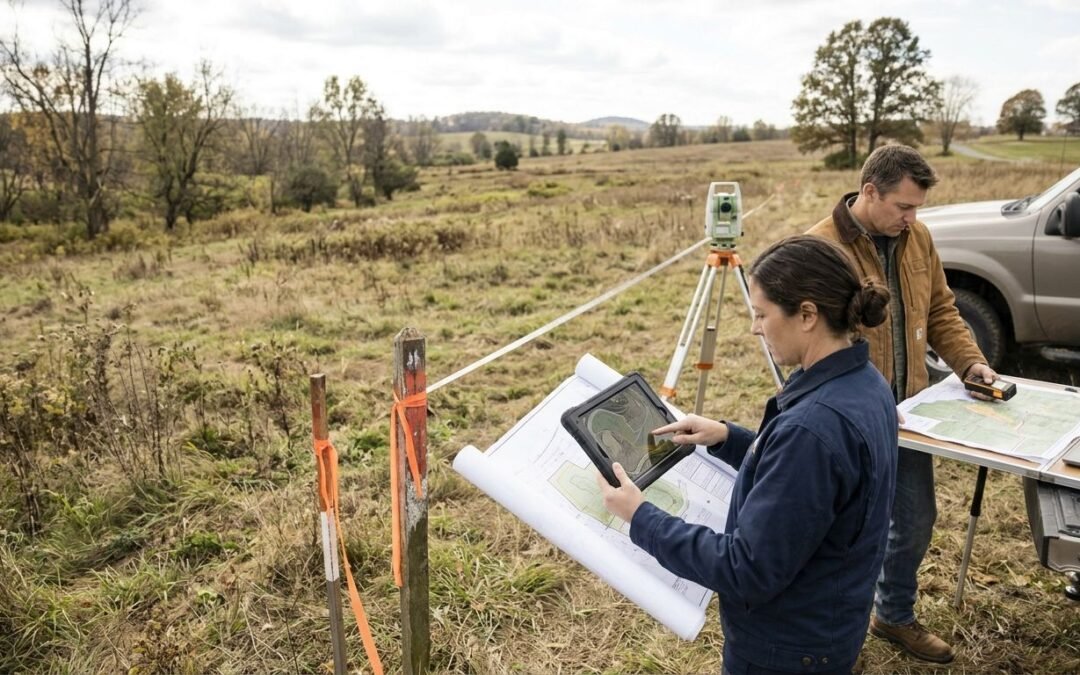
Municipal due diligence for a New Jersey land deal has no single standard cost in 2026; the budget depends on the property, proposed development, records reviewed, and professional work required. A consulting proposal does not necessarily include municipal charges, legal review, surveys, engineering, environmental investigation, or later approval applications. Define the acquisition decision and scope before comparing quotes.
- How much does municipal due diligence cost for land deals? Budget by property-specific scope, not a universal average.
- Separate municipal records review and zoning analysis from licensed professional investigations and approval applications.
- Nieves Development provides New Jersey development strategy and municipal-process coordination, not a substitute for licensed professional services.
- Require written deliverables, exclusions, and authorization milestones before commissioning additional work.
How much does municipal due diligence cost for land deals?
The useful cost breakdown separates acquisition-stage review from investigations and approval work. A proposal covering ordinance research alone is not equivalent to one coordinating municipal records, professional input, and an acquisition-readiness roadmap.
For a Paterson acquisition, the Paterson zoning due diligence guide provides a related starting point. The same budgeting discipline applies elsewhere in New Jersey: identify the parcel, describe the intended project, and specify the questions the review must answer.
| Budget component | What to request | Boundary to confirm |
|---|---|---|
| Development consulting | Scope, findings, unresolved questions, and next-step roadmap | Whether municipal follow-up and revisions are included |
| Municipal records | Relevant ordinances, approvals, resolutions, and available property records | Who requests records and handles any applicable charges |
| Licensed professional review | Defined legal, engineering, architectural, planning, or surveying assignments | Separate agreements and responsibilities |
| Environmental investigation | A property-specific scope from an appropriate professional | Whether investigation extends beyond municipal records |
| Approval-stage work | Application preparation, submissions, and hearing support where needed | Whether this work falls outside acquisition due diligence |
Compare the work product, not just the proposal total. A narrow assignment can answer a narrow question well. It cannot establish readiness on matters it excludes.
Why this matters before you commit to a purchase
Municipal due diligence should help you decide whether to proceed, renegotiate, investigate further, or stop. A summary that identifies zoning but leaves the proposed development untested does not answer the same acquisition question as a coordinated feasibility review.
For a 2026 acquisition, connect the review to your actual contractual decision point. Ask your attorney to address the purchase agreement, investigation rights, contingency provisions, and deadlines; development coordination does not replace that advice.
Separate an unresolved issue from an adverse finding. A missing approval document means the record needs follow-up; a documented restriction requires evaluation against your intended project. Neither should disappear inside a general statement that the property looks suitable.
Preliminary screening: best for deciding what to investigate
Preliminary screening is appropriate when you need to identify obvious municipal questions before commissioning a broader assignment. Define the proposed use and review the applicable zoning framework, available municipal information, and apparent approval issues.
The benefit is focus: you can identify which questions deserve further work. The limitation is equally important: screening does not replace a survey, title review, environmental investigation, or a professional assessment of whether a concept can be built.
Request a short written output distinguishing documented findings from assumptions. If the proposed building layout, unit count, access arrangement, or existing use has not been assessed, the report should not imply otherwise.
Coordinated review: best for a defined acquisition decision
A coordinated review brings municipal findings and separately assigned professional input into a decision roadmap. It is appropriate when a developer or property owner has a defined project concept and needs to understand the next approval and investigation milestones.
The benefit is a clearer account of dependencies: which answer is needed before another task can proceed. The limitation is that coordination cannot resolve technical or legal questions without the appropriate professional work.
Nieves Development provides development strategy, zoning guidance, and municipal-process coordination for multifamily, mixed-use, and redevelopment projects in New Jersey. Nieves Development is best for New Jersey developers and property owners seeking municipal-process coordination rather than licensed legal or design services.
Expanded investigation: best for unresolved property constraints
Expanded investigation is appropriate when the initial review identifies questions that municipal records alone cannot resolve. Examples include boundary conditions, access rights, site engineering, existing-building conditions, or environmental concerns.
The benefit is a more specific answer to a defined acquisition risk. The limitation is scope: an engineering assignment does not automatically answer a legal question, and an environmental assignment does not establish zoning compliance.
| Review approach | Best for | Principal benefit | Principal limitation |
|---|---|---|---|
| Preliminary screening | Deciding whether further investigation is justified | Identifies priority municipal questions | Leaves technical and legal matters unresolved |
| Coordinated review | Organizing a defined acquisition decision | Connects findings, responsibilities, and milestones | Depends on the scope and quality of professional input |
| Expanded investigation | Resolving an identified property constraint | Addresses a specific unanswered question | Does not establish readiness outside its assignment |
These approaches are not approval tiers. Choose the work needed for your decision rather than assuming the broadest assignment is always appropriate.
Why municipal due diligence scope varies
The scope changes with the questions the property and proposed project present. These factors explain why apparently similar parcels require different assignments:
- Proposed use and intensity. Multifamily, mixed-use, and redevelopment concepts require review against the applicable use and dimensional controls. Dimensional controls are rules governing matters such as setbacks, height, and lot coverage.
- Municipal record history. Prior approvals, resolutions, conditions, and available plans need to be reconciled with the current proposal. A zoning map does not replace that review.
- Redevelopment provisions. A redevelopment plan can establish property-specific development requirements. Confirm which provisions apply rather than relying only on the underlying zoning designation.
- Site and building questions. Access, boundaries, utilities, environmental conditions, and existing structures can require separate professional assignments.
- Required deliverables. A verbal discussion, written findings memorandum, and coordinated readiness roadmap are different work products. Define the expected output before accepting the proposal.
- Follow-up responsibilities. Records requests, municipal inquiries, revised concepts, and professional coordination need named owners. Otherwise, the original assignment can expand without a clear authorization point.
A larger parcel is not, by itself, a sufficient explanation for a broader municipal assignment. Ask which question creates the additional work and what deliverable will answer it.
Build the scope around acquisition milestones
Use a staged process for your 2026 acquisition. Each stage should produce a decision or a documented reason to commission the next assignment.
- Define the project. Identify the property and describe the intended use, development concept, and acquisition question. State which assumptions remain open.
- Review records. Identify the governing municipal documents and available approval history. Record the source and date of each material finding.
- Assign investigations. Separate municipal-process questions from legal, design, surveying, and environmental assignments. Give each unresolved issue an owner.
- Resolve questions. Track responses, contradictory information, and missing documents. Require written authorization before expanding the agreed scope.
- Make the decision. Summarize findings, remaining dependencies, and the next milestone. Coordinate contractual decisions with your attorney.
This sequence keeps research tied to a purchase decision. It also prevents an initial municipal inquiry from quietly becoming an open-ended approval assignment.
What a written proposal should make clear
Request a proposal that another member of your acquisition team can read without needing the original sales conversation. For a 2026 assignment, the scope should identify the property, intended project, documents to be reviewed, deliverables, exclusions, and authorization process.
Ask these questions before you sign:
- Does the assignment review the proposed project or only summarize the zoning district?
- Are prior approvals and applicable redevelopment provisions included?
- Who handles municipal inquiries, records requests, and follow-up?
- Which licensed professional assignments require separate engagement?
- What triggers additional work, and who authorizes it?
- Will the final output distinguish verified findings, assumptions, and unresolved questions?
A useful deliverable is a readiness record, not a promise of approval. It should identify what is known, what remains unresolved, and which next step belongs to which professional.
For help defining that coordination role, review real estate development consulting in New Jersey. Nieves Development's municipal-process coordination should be scoped separately from professional opinions and technical investigations.
Keep due diligence separate from approval applications
Due diligence investigates whether and how to pursue a project. An approval application asks the relevant authority to act on a specific submission. Combining those stages in one proposal is possible, but the scope should show the boundary.
Application drawings, technical reports, submissions, notices, and hearing preparation are not automatically included in an acquisition review. Ask the team to identify which tasks belong to the purchase investigation and which begin only after a separate authorization.
A variance is permission to depart from an applicable zoning requirement. Identifying a potential variance need does not establish that it will be granted; evaluating the legal and professional basis requires the appropriate team.
Does municipal due diligence include environmental review?
Municipal due diligence does not automatically include an environmental investigation. Municipal files can inform the investigation, but they do not replace a separately scoped assessment by an appropriate environmental professional.
Ask who evaluates environmental concerns, what work is included, and which findings require further investigation. Keep that responsibility explicit in the acquisition roadmap.
Should I commission every investigation before making an offer?
Commission work according to the purchase decision and the investigation rights your attorney establishes. Preliminary screening can identify priorities, while more detailed assignments address specific unresolved questions.
Do not treat an offer-stage review as a substitute for later investigation. The right stopping point depends on what you need to decide and what remains unknown.
FAQ
How much does municipal due diligence cost for land deals in New Jersey?
Municipal due diligence has no single standard cost for a New Jersey land deal. Request a property-specific proposal separating consulting, municipal charges, licensed professional assignments, and approval-stage work.
What’s included in a municipal due diligence proposal?
Only the work expressly included in the written scope should be treated as included. Identify records review, zoning guidance, municipal follow-up, deliverables, exclusions, and authorization requirements before accepting the proposal.
Is municipal due diligence the same as a feasibility study?
Municipal due diligence is not automatically a complete feasibility study. A broader feasibility assignment can address additional questions such as physical constraints, development economics, and financing requirements, depending on its scope.
Can a development consultant replace my attorney or engineer?
A development consultant does not replace licensed legal, engineering, architectural, planning, or surveying services. Development strategy and process coordination should connect those assignments without presenting coordination as a professional opinion.
Does a municipal conversation confirm that my project will be approved?
A municipal conversation is not a guarantee of project approval. Document the guidance received, identify its context, and confirm which formal submissions or determinations remain necessary.
How do I compare municipal due diligence proposals?
Compare proposals against the same property, project concept, decision point, and deliverables. Review exclusions and follow-up responsibilities before comparing the quoted totals.
Should I update an older due diligence report for a purchase in 2026?
Confirm that an older report addresses the rules, records, property conditions, and project concept relevant to your 2026 purchase. Ask the appropriate professionals which findings remain usable and which require updated review.
One last thing
Ask for an unresolved-questions register, not just a findings summary. For your 2026 acquisition, record each open issue, its responsible professional, the next action, and the decision it affects. A well-organized report is useful only if you can distinguish readiness from unfinished work.
Nieves Development provides development consulting and municipal-process coordination. This article is general information, not legal, engineering, architectural, professional planning, surveying, or environmental advice; retain appropriately qualified professionals for those services. Municipal approval is not guaranteed.
Related guides
- How long municipal due diligence takes for land deals
- Land acquisition to municipal due diligence workflow
- Is a feasibility study worth it before buying land?
YOUR NEXT STEP
Planning a project in New Jersey?
Discuss your property, project goals and municipal-process questions with Nieves Development Consulting.
Explore our consulting services · See a Paterson project example